


Thermal Spray Coatings
High Velocity Oxygen Fuel (HVOF) Thermal Spray Coatings
The High Velocity Oxygen Fuel (HVOF) process is an advanced thermal spray technology designed to produce exceptionally dense, hard, and wear-resistant coatings for industrial components. Unlike many traditional surface treatments, HVOF achieves its performance by propelling coating material particles at very high speed toward the surface, creating a tightly bonded, low-porosity protective layer. How the HVOF Process Works
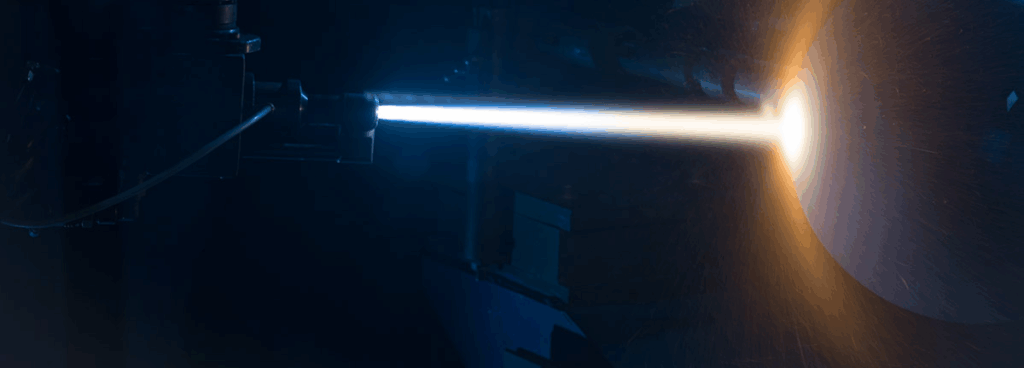
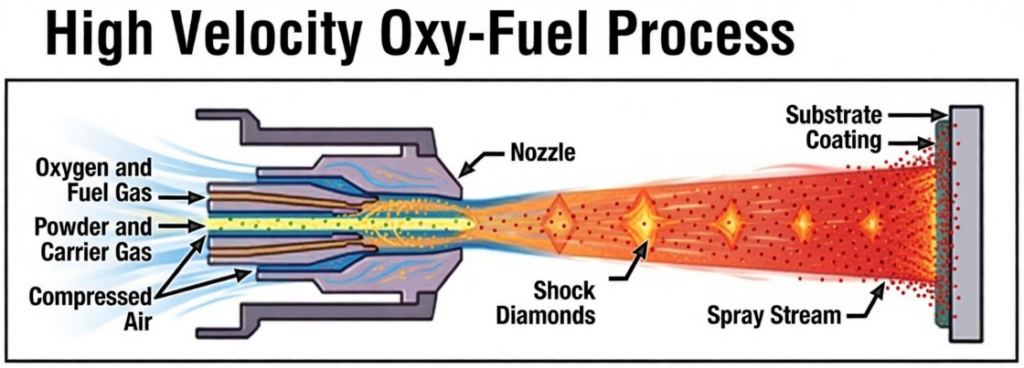
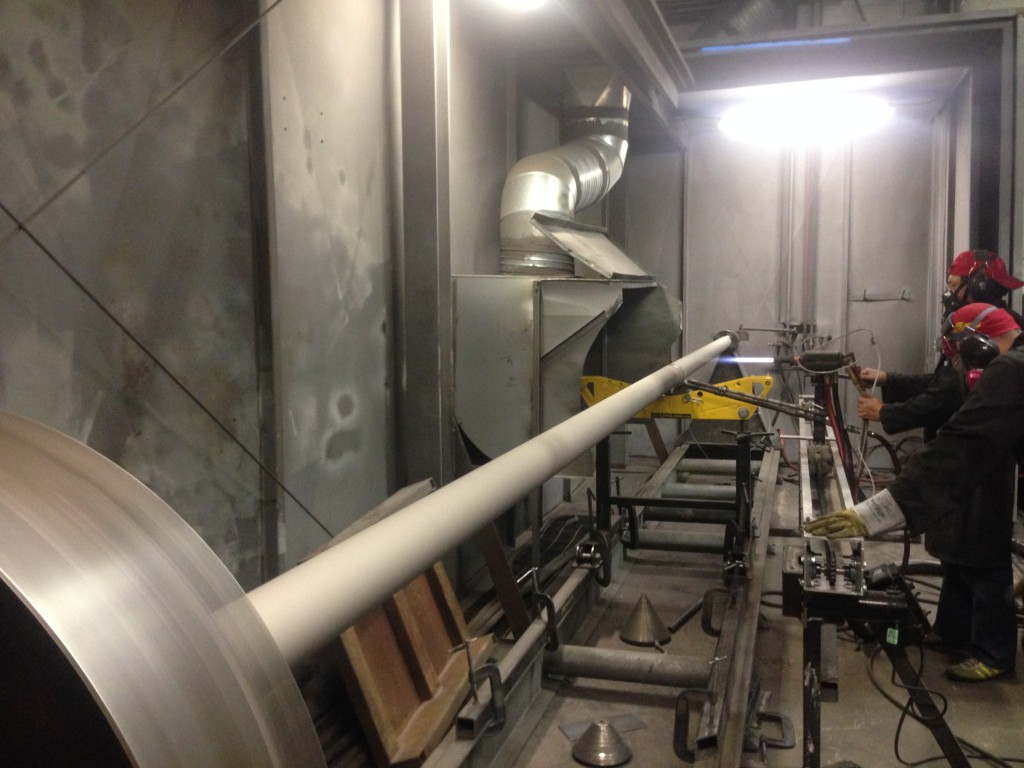
In HVOF thermal spraying, a controlled mixture of fuel and oxygen is combusted under high pressure within a specialized spray gun. The resulting high-pressure gas stream is accelerated through a nozzle at velocities often approaching or exceeding the speed of sound. Powdered coating material is introduced into this high-velocity gas stream, where it heats and accelerates before impacting the substrate surface.
Unlike coating processes that fully melt feedstock materials, HVOF typically brings particles to a semi-molten state, allowing them to deform and lock onto the surface with exceptional force. The result is a coating with very low porosity, superior bond strength, and a fine, uniform microstructure.
Why HVOF Is Exceptional
HVOF coatings are known for several performance advantages that make them ideal for demanding industrial applications:
- High density and low porosity: The high particle velocities reduce voids and imperfections in the coating.
- Superior bond strength: The kinetic impact of particles produces strong adherence to the substrate.
- Excellent wear and erosion resistance: Dense, hard coatings withstand abrasive and erosive environments.
- Enhanced corrosion protection: Low porosity helps block corrosive media from reaching the base material.
- Smooth surface finish: As-sprayed coatings can achieve fine surface profiles suitable for precision components.
Typical Applications
HVOF coatings are widely used where extended service life and high performance are critical, including:
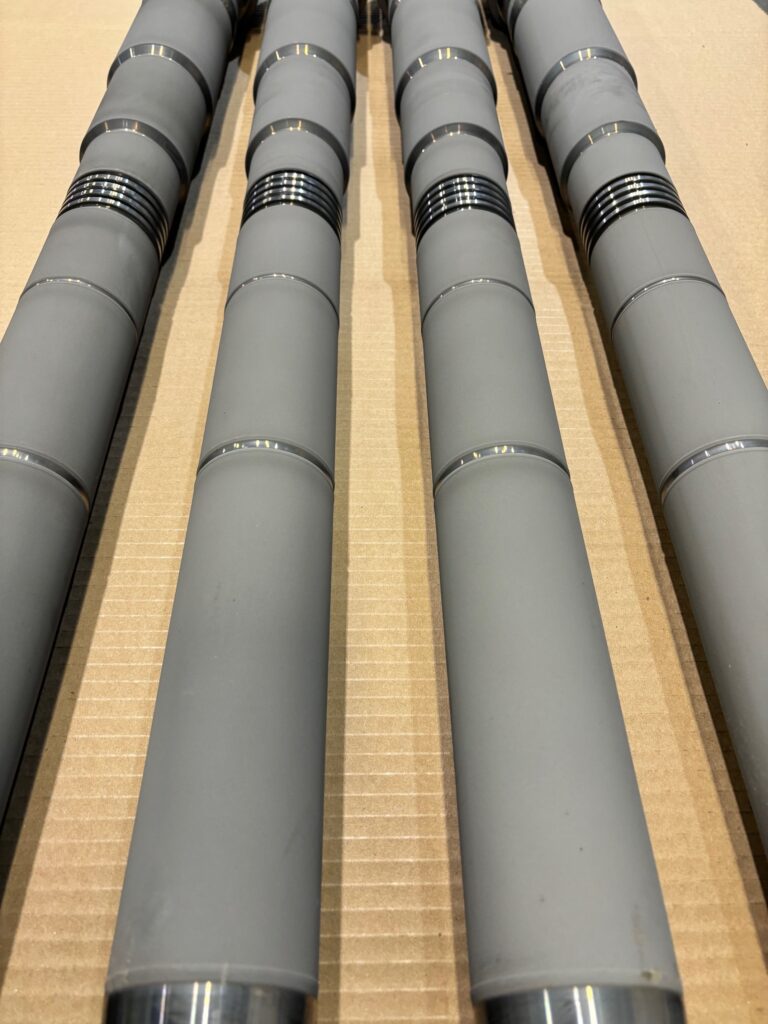
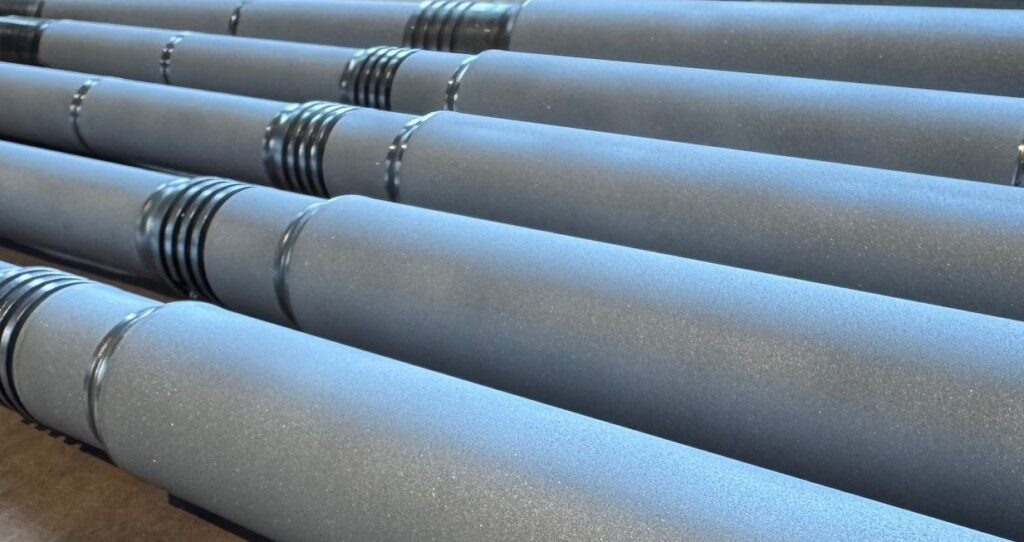
- Wear and abrasion protection for down hole drilling tools, seal diameters and bearing surfaces
- Corrosion resistance for valves, pump components, and processing equipment
- Replacement for hard chrome plating in hydraulic and industrial parts
- Surface enhancement for aerospace, energy, mining, and heavy equipment components
Advantages of HVOF Coatings
Taskmaster Technologies offers a turnkey HVOF solution, integrating robotic manipulation for precision and repeatability with extensive application expertise. Our in-house finishing capabilities allow us to meet stringent tolerance and surface finish specifications, helping customers reduce processing time, improve component life, and lower overall operating costs.
Typical HVOF Coating Materials
HVOF technology supports a wide range of high-performance coating materials, including:
- Tungsten Carbide–Cobalt (WC-Co)
- Tungsten Carbide–Cobalt Chromium (WC-CoCr)
- Chromium Carbide–Nickel Chromium (Cr₃C₂–NiCr)
- Nickel-based alloys (Inconel®, Hastelloy®-type materials)
- Cobalt-based alloys (Stellite®-type materials)
- Stainless steel alloys
- Wear- and corrosion-resistant superalloys
Material selection is optimized based on wear mechanism, corrosion environment, operating temperature, and dimensional requirements, ensuring the most effective coating solution for each application.
Wire Arc Thermal Spray Coatings
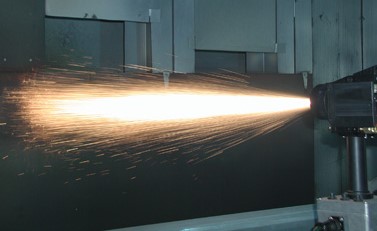
Wire Arc thermal spray coatings provide a cost-effective alternative to higher-end processes such as HVOF, while still delivering reliable performance for many corrosion and wear applications. This process is particularly well suited for large components, field repairs, and applications where speed and economy are critical.
Wire Arc coatings are commonly used for corrosion protection, with zinc and zinc–aluminum alloys increasingly specified for atmospheric and industrial environments. In addition, a variety of wear-resistant alloys can be applied, making Wire Arc an effective solution for rapid equipment repair and dimensional restoration.
A key advantage of the Wire Arc process is its effectiveness for dimensional restoration prior to HVOF carbide application. Wire Arc coatings can be applied at build-up thicknesses exceeding 0.100 inches, allowing worn components to be restored to near-net dimensions before a final HVOF wear surface is applied. This approach reduces machining time, improves coating efficiency, and provides a cost-effective repair strategy for heavily worn parts.
Typical Advantages
- Cost-effective alternative to HVOF for suitable applications
- Excellent corrosion protection using zinc and zinc–aluminum systems
- Fast deposition rates for efficient repairs
- Minimal heat input, reducing risk of distortion
- Ideal for large components and field-applied coatings
Taskmaster Wire Arc Capacity
Our experienced team will help determine whether a Wire Arc coating is the right technical and economic fit for your application.
Thermal Spray Capacity
Taskmaster Technologies offers extensive thermal spray capabilities, supporting both precision components and large-scale industrial applications.
HVOF Systems
- HVOF #1: TAFA JP-8000 with data acquisition
- HVOF #2: TAFA JP-8000 with data acquisition
Spray Cells & Handling
- Spray cell #1, up to 24″ diameter and 120″ (10 feet) long components
- Spray cell #2, up to 24″ diameter and 240″ (20” feet) long components
- Vertical turntable with 24″ chuck for smaller components
- Vertical turntable, 20,000 lb capacity with 60″ table for large parts
Wire Arc Systems (TWA)
- TWA #1: TAFA 8830
- TWA #2: TAFA 8830
- TWA #3: Sulzer Metco Smart Arc
This flexible equipment portfolio allows Taskmaster to handle a wide range of sizes, geometries, and materials, delivering high-quality, repeatable coatings for both repair and new-component applications.
Grit Blast / Shot Peen
Surface Blast Preparation Services
Proper surface preparation is a foundational step in achieving long‑lasting, high‑performance coatings. At Taskmaster Technologies, we understand that the effectiveness of any thermal spray, weld overlay, or protective finish depends on the quality of the substrate surface. Our comprehensive blast preparation services ensure optimal cleanliness, surface profile, and adhesion — maximizing coating durability and service life.
What We Offer
Glass Bead Blasting
Glass bead blasting is an effective method for surface decontamination and cleaning. It gently removes rust, scale, paint, and other surface contaminants without excessively profiling the substrate. This makes it ideal for preparing corroded or dirty components prior to coating or inspection.
Grit Blasting
Grit blasting uses abrasive media in a range of sizes and materials to produce a clean, textured surface profile. The resulting roughness enhances mechanical grip and significantly improves coating bond strength, making it the preferred preparation method for high‑performance overlays and thermal spray coatings.
Shot Peening
Shot peening is a controlled impact process that induces beneficial compressive stress on the surface of critical machined parts. Using media from #110 to #780 grit sizes, we can tailor the peening intensity to your component’s requirements, helping to relieve surface tension, delay fatigue crack initiation, and improve part longevity.
Why Surface Blast Preparation Matters
- Improved Coating Adhesion: Proper profiling increases the mechanical bond between substrate and coating
- Enhanced Durability: Clean, correctly prepared surfaces help coatings withstand wear, corrosion, and impact
- Stress Management: Shot peening improves fatigue resistance on precision components
- Versatility: Suitable for new parts, repairs, and reconditioning of service‑worn components
Taskmaster’s blast preparation capabilities are available as a stand‑alone service or integrated into our coating and overlay workflows, ensuring every part is optimally prepared for its next phase of service.
Contact us to discuss your surface preparation and coating requirements
